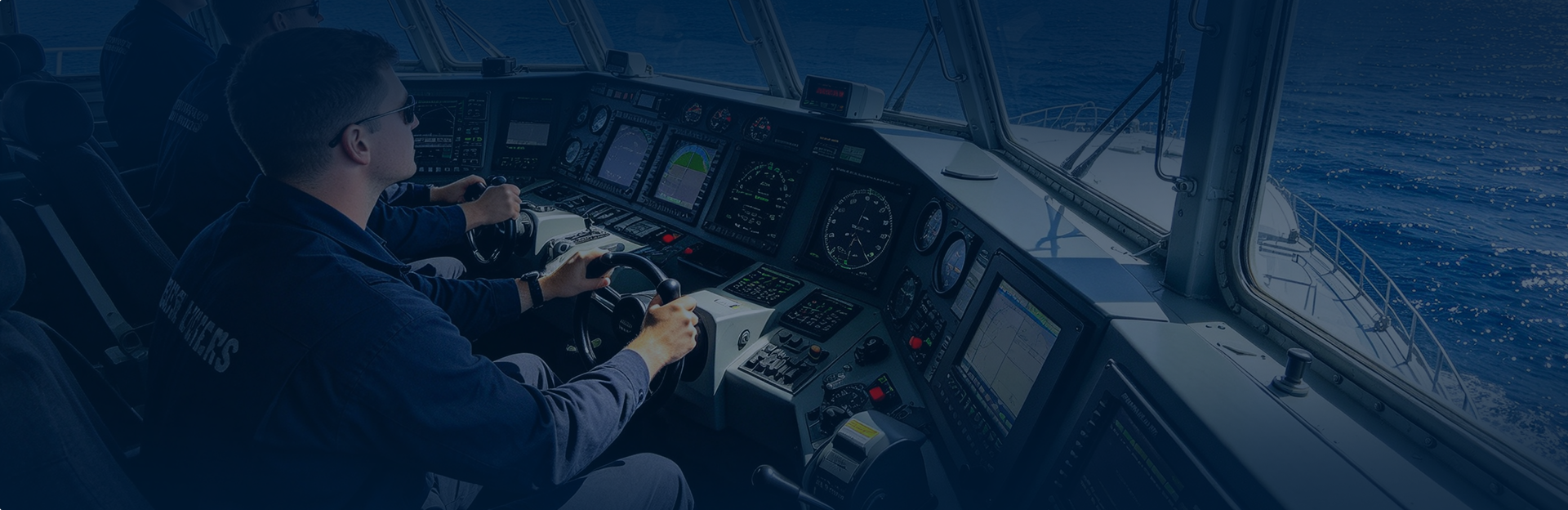
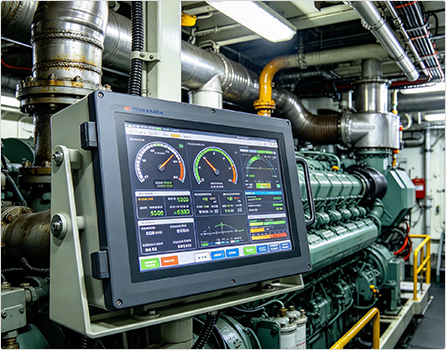
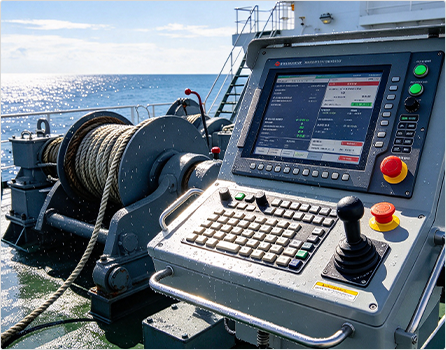
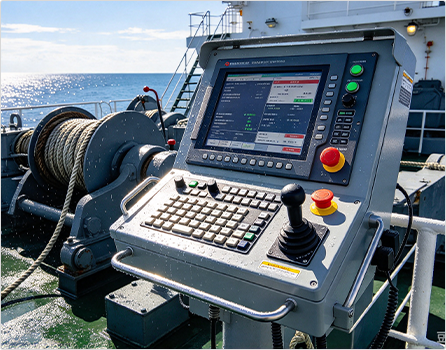
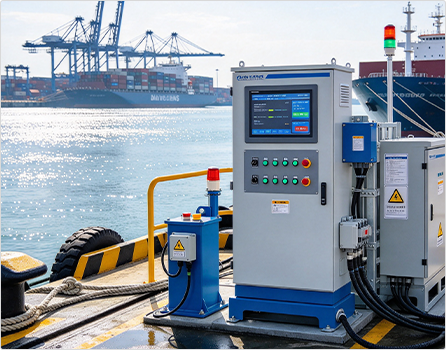
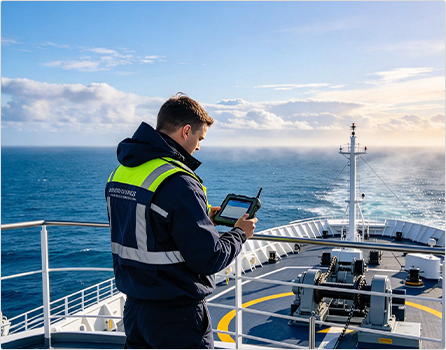
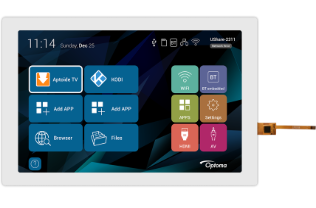
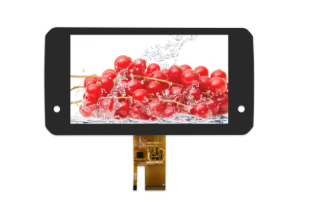
Maritime vessels and outdoor highlight display

Industry Demand

Commercial and leisure vessels are moving toward integrated glass-bridge consoles, more on-board electronics and, on newer platforms, electric and hybrid propulsion. As a result, the number of displays on a vessel keeps growing: bridge navigation and chartplotter screens, radar and sonar repeaters, engine-room monitoring panels, thruster and winch control stations, AIS and communication terminals, and fuel, bilge or tank level gauges.

These displays live outdoors or in semi-exposed positions. They work under direct solar radiation (up to 1,120 W/m2 in the solar thermal profile our marine customers specify), in salt fog and high humidity, across ambient temperatures from around -20 degC to +55 degC with cover-glass surface temperatures reaching 90 degC in strong sun, and under continuous hull and engine vibration. Crews operate them in daylight, at night, and while wearing polarized sunglasses, and the equipment must survive regular deck wash-down.

Industry Pain Points

Sunlight washout and mirror reflection. Standard panels at 200-700 cd/m2 become unreadable in direct sun, and polished cover glass turns the screen into a mirror at the helm.
-01

Polarized sunglasses extinction

LCD output is linearly polarized. When the sunglasses axis crosses the screen axis, the display darkens or goes completely black; rotating the polarizer only moves the problem to another installation angle.
-02

Solar thermal load on the laminated stack.

Coated glass, OCA and polarizer are exposed to strong infrared and ultraviolet radiation, so ordinary consumer-grade OCA whitens, hazes, bubbles or delaminates - usually after the equipment is already in service.
-03

Wide temperature and condensation

Response slows in cold conditions, contrast drops when hot, and sealed enclosures can fog internally behind the cover glass.
-04

Salt fog, humidity and mold

Corrosion, conductive residue and optical degradation shorten service life on deck and in engine spaces.
-05

Vibration, shock and EMC

Constant hull vibration loosens FPCs and connectors, while radar, VHF and inverter equipment inject interference that shows up as flicker or image noise.
-06

Night-time luminance control

A screen bright enough for noon is blinding on the night watch; crews need a wide, flicker-free dimming range.
-07

Certification evidence

System-level approvals (for example IEC 60945 or class-society requirements) need display-level test reports, and most module suppliers do not provide them.
-08

Long service life and retrofit fit

Vessels stay in service for a decade or more, so replacement displays must drop into existing cutouts, interfaces and mounting holes.

Technical Solution

High-brightness sunlight-readable modules with AG / AR / AF cover glass. Backlight designs from 1,000 cd/m2 up to 3,500 cd/m2, combined with anti-glare (AG) surface treatment that scatters reflected light, anti-reflection (AR) coating that raises transmittance, and anti-fingerprint (AF) finish. Contrast of 800:1 and above keeps the image stable in bright daylight.

Optical full lamination

Vacuum lamination plus autoclave process bonds the cover glass to the panel with no air gap, eliminating internal fogging, removing extra reflective interfaces, raising contrast and improving impact resistance.

Marine-grade optical adhesive

Vacuum lamination plus autoclave process bonds the cover glass to the panel with no air gap, eliminating internal fogging, removing extra reflective interfaces, raising contrast and improving impact resistance.

Quarter-wave plate (QWP) polarizer

Vacuum lamination plus autoclave process bonds the cover glass to the panel with no air gap, eliminating internal fogging, removing extra reflective interfaces, raising contrast and improving impact resistance.

Wide-temperature design

Vacuum lamination plus autoclave process bonds the cover glass to the panel with no air gap, eliminating internal fogging, removing extra reflective interfaces, raising contrast and improving impact resistance.

Waterproof and vibration-resistant mechanics

Vacuum lamination plus autoclave process bonds the cover glass to the panel with no air gap, eliminating internal fogging, removing extra reflective interfaces, raising contrast and improving impact resistance.

EMC control and flicker-free dimming

Vacuum lamination plus autoclave process bonds the cover glass to the panel with no air gap, eliminating internal fogging, removing extra reflective interfaces, raising contrast and improving impact resistance.

Third-party verification

Vacuum lamination plus autoclave process bonds the cover glass to the panel with no air gap, eliminating internal fogging, removing extra reflective interfaces, raising contrast and improving impact resistance.

Solution Advantages

High-reliability design

Wide temperature range, salt-fog and humidity resistance, vibration-tolerant mechanics and EMC-controlled signal routing, verified on the fully laminated module in the delivery condition

High-resolution clear display

IPS panels with full viewing angle (80/80/80/80 or 85/85/85/85), high contrast and 262K colors and above, readable from any position at the helm.

Low-power technology

High-efficiency LED backlights with wide-range DC dimming; brightness follows ambient light, so average power consumption stays low, especially during night operation.

Customization service

Size, brightness, cover glass (AG/AR/AF), touch, FPC pinout, interface, heater and mechanical outline are configurable, with engineering support from drawings and samples through to mass production.

Related Products

Application Scenarios

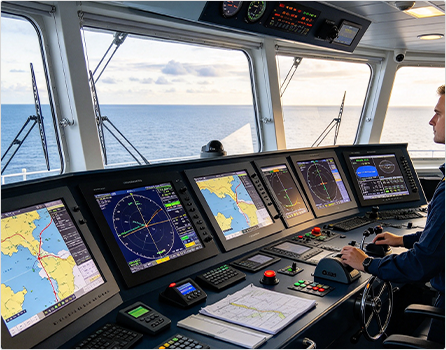
Bridge navigation and chartplotter consoles
Primary helm displays that must stay readable in daylight and dim smoothly at night.
view more >
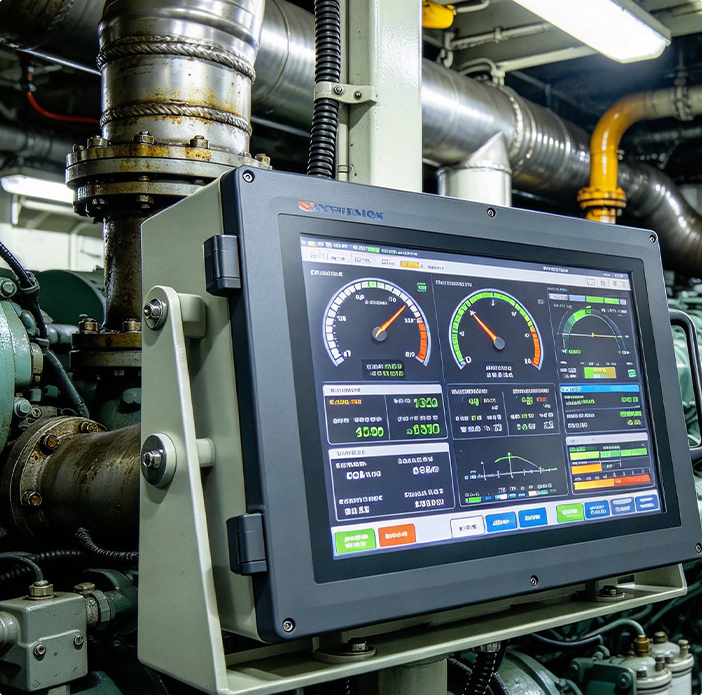
Engine-room monitoring panels.
Long-duty displays working under industrial lighting and continuous vibration.
view more >
Open-deck control stations
Winch, thruster and docking controls exposed to direct sun, salt spray and wash-down.
view more >
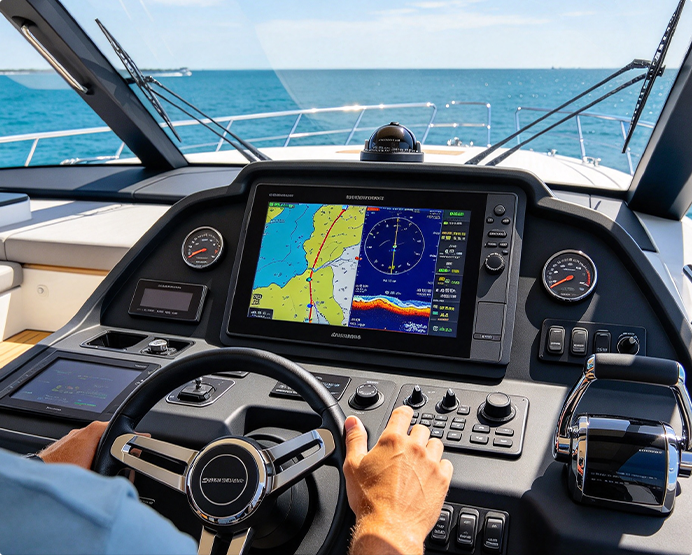
Yacht helm and flybridge displays
Compact sunlight-readable panels that remain clear through polarized sunglasses.
view more >
Port and marina equipment
Bollard controls, gangway and shore-power stations running outdoors around the clock.
view more >
AIS, communication and sonar repeater terminals
Information displays that must stay legible and reliable over long service intervals.
view more >

Customer Testimonials

"The touchscreen is operated continuously during a live session, so responsiveness is not a nice-to-have.

The panel keeps up with fast tapping over hours of use, and we have not had touch complaints from users."

Product Manager
live streaming equipment manufacturer

"We mount this panel in landscape, and the full viewing angle is what makes it work:

the interface stays readable whether the user is standing at the terminal or watching from the side."

Hardware Engineer
consumer electronics
"The cover glass was made to our outline, so the display sits flush in the front panel without a separate bezel. That saved us a tooling change."
Industrial Designer
live streaming devices

FAQ

What is the minimum order quantity (MOQ) for custom LCD displays?

For most customized projects, the MOQ ranges from 200 to 500 pieces, depending on the complexity and components involved. For long-term cooperation or strategic customers, we can be flexible. Sample orders are always welcome before mass production.

How long does it take to complete a custom LCD project?

Solution proposal: 1–3 working days

Sample development: 7–10 working days (depending on complexity)

Mass production: 2–4 weeks

The full cycle from concept to delivery is typically 3–6 weeks.

Can I get technical support during development and after delivery?

Yes. Our engineers provide one-on-one technical support, including interface design assistance, driver IC recommendations, FPC layout support, and troubleshooting — before, during, and after the project.

Do you offer customization for both display and touch panel?

Absolutely. We support full customization of both TFT LCD display modules and capacitive or resistive touch panels, including shape, thickness, bonding method (OCA/air gap), interface, cover lens printing, and more.

Are your displays compliant with international standards?

Yes. All our products meet international quality and safety standards including RoHS, REACH, UL, and CE. We are certified by ISO9001, ISO14001, IATF16949, ensuring strict quality control throughout production.

What warranty do you provide for custom display modules?

We offer a standard 12-month warranty for all custom LCD products, covering manufacturing defects. Extended support is available for long-term cooperation projects.

Can you help with packaging and shipping for overseas orders?

Yes. We provide custom packaging to protect sensitive modules during transit and support international shipping through DHL, FedEx, UPS, or forwarders of your choice. Export documentation and HS codes are included.

What if one of the key components (like driver IC) is discontinued in the future?

We provide lifecycle planning and stable BOM management, which means we select long-term available components and notify customers in advance if any replacement is needed — ensuring smooth supply for long-running products.

Ready to Customize Your LCD Module? Let's Build It Together.

Tell us your requirements — size, interface, brightness, touch, or anything else — and our team will provide a tailored solution with fast support and factory-direct pricing.

Contact us for a free quote and consult.

CONTACT US

Request A Quote

*We respect your privacy. When you submit your contact information, we agree to only contact you in accordance with our Privacy Policy.
×

Contact Us

*We respect your privacy. When you submit your contact information, we agree to only contact you in accordance with our Privacy Policy.